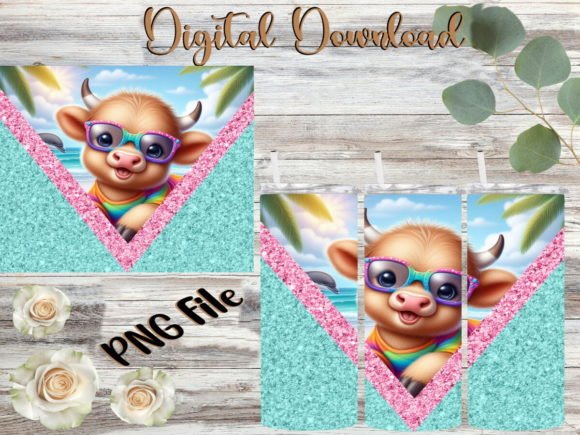
Baby Highland Cow Summer Tumbler
A Cheerful, Compact Design That Fits Real-Life Embroidery Needs
As someone who’s stitched hundreds of custom orders—from boutique baby onesies to Etsy shop merchandise—I opened Baby Highland Cow Summer Tumbler expecting a lighthearted summer motif. What I found was more useful than cute: a clean, balanced graphic with strong silhouette appeal and just enough detail to feel handmade without overwhelming the stitch field. It’s not overly intricate, but it’s not generic either—there’s warmth in the cow’s expression, a subtle nod to Scottish charm, and a relaxed summery vibe that translates well across fabric types.
How It Performs on Actual Embroidered Products
I tested Baby Highland Cow Summer Tumbler as the centerpiece for a linen tea towel set and a lightweight cotton tote bag—two items I regularly produce for local craft fairs and small-batch Etsy listings. On both, the design held up beautifully. Its proportions allow for easy resizing within standard hoop limits (4x4" to 5x7"), and because it’s a PNG digital file at 300 dpi, I could scale it confidently before digitizing—no pixelation, no jagged edges. That clarity matters when you’re prepping an embroidery file for satin-stitched horns or fine fill-stitched ears.
It shines especially on baby embroidery projects: think organic cotton onesies, muslin swaddle blankets, or nursery pillow covers. The rounded shape and soft contours avoid sharp angles that snag during wear or washing. As a sweatshirt embroidery option? Yes—but only on mid-weight fleece or brushed cotton, where stitch density won’t cause puckering. On ultra-thin tees or stretchy jersey, I’d simplify the inner details first or add light tear-away stabilizer underneath.
Where to Use It Thoughtfully
- Small hoop sizes: Works cleanly down to 3x3", but avoid shrinking below 2.5" wide—the eyes and nostrils lose definition in running stitch.
- Textured fabrics: Linen, canvas, and terry cloth absorb detail well, but test stitch density first; too many fill stitches on looped fabric can flatten texture unintentionally.
- Dark or black fabric: The design reads best with high-contrast thread—cream or pale yellow on navy, mint on charcoal. Avoid matching thread colors unless you want a subtle tone-on-tone effect.
- Curved surfaces like caps: Not ideal for front-panel cap embroidery unless resized and re-digitized for curve compensation—it’s a flat graphic, not an applique design built for 3D form.
- Frequent-wash items: For kitchen towels or baby bibs, reinforce with cutaway stabilizer and lock stitches at start/end points to prevent fraying over time.
What It Adds to Your Finished Product—and Your Brand
Baby Highland Cow Summer Tumbler doesn’t scream “trendy”—it whispers “thoughtful.” That makes it quietly powerful for handmade product lines where authenticity matters more than virality. Customers notice when a design feels intentional, not mass-produced. On a personalized gift—a custom embroidered blanket for a new parent, for example—it conveys care and craftsmanship. It also supports brand consistency: whether you're selling through Etsy, your own small shop, or local boutiques, this graphic reads cohesive alongside other nature-inspired or seasonal design assets.
Visually, it lifts the perceived value of simple items. A plain cotton apron becomes a curated kitchen essential. A basic sweatshirt gains personality without looking cluttered. And because it’s rooted in a recognizable, friendly motif—not abstract or overly stylized—it builds instant recognition and emotional connection. That’s gold for holiday embroidery, wedding gifts (think “new home” kitchen sets), or boutique branding where warmth and approachability matter.
Practical Designer Notes Before You Stitch
- Always test Baby Highland Cow Summer Tumbler on scrap fabric first—especially if you’re using textured, dark, or stretchy material.
- Check thread color contrast early: print a black-and-white mockup to preview how light/dark areas will translate in stitch.
- Review stitch density in your embroidery software—this PNG isn’t a machine embroidery design yet, so adjust fill stitch spacing to suit your fabric weight.
- Confirm hoop size compatibility before digitizing; while scalable, extreme resizing may require reworking satin-stitch paths.
- Inspect small details—like the cow’s eyelashes or udder contour—at 200% zoom to ensure they’ll resolve cleanly in your final embroidery file.
- Use proper stabilizer: tear-away for stable wovens, cutaway for knits or delicate weaves.
- If selling finished products commercially, verify licensing terms—this is a digital embroidery file, not an SVG cut file, and its use in physical goods depends on the seller’s policy.
- For printable mockups or digital product previews, the 300 dpi resolution holds up cleanly across web and social formats—ideal for Etsy sellers building cohesive listings.
A Design That Earns Its Place in Your Workflow
This isn’t a “just add water” graphic. Baby Highland Cow Summer Tumbler rewards attention. It asks you to consider fabric, thread, stabilizer, and end use—not as hurdles, but as part of the creative process. That’s why it fits so naturally into real craft business workflows: whether you're prepping a batch of embroidered patches for resale, designing a limited-run baby collection, or creating personalized gifts for repeat clients. It’s versatile without being vague, cheerful without being childish, and detailed without being demanding.
As a Print Templates asset, it bridges digital and physical worlds cleanly. And as a Graphics file meant for embroidery adaptation, it gives you room to interpret—not just replicate. That flexibility is rare. Treat it like a solid sketch, not a finished blueprint, and you’ll find Baby Highland Cow Summer Tumbler becomes one of those quiet workhorses in your design library: reliable, adaptable, and consistently well-received by customers who know handmade when they see it.