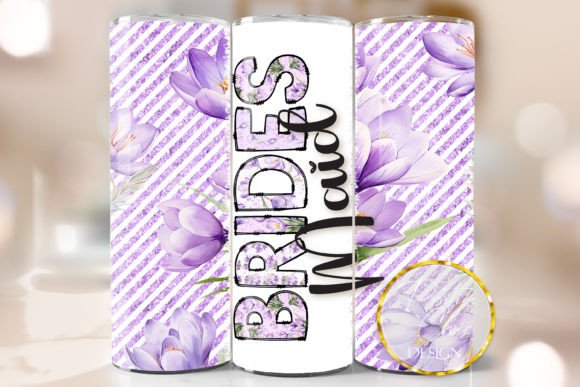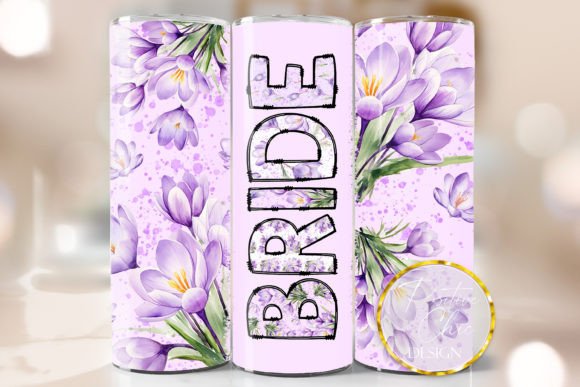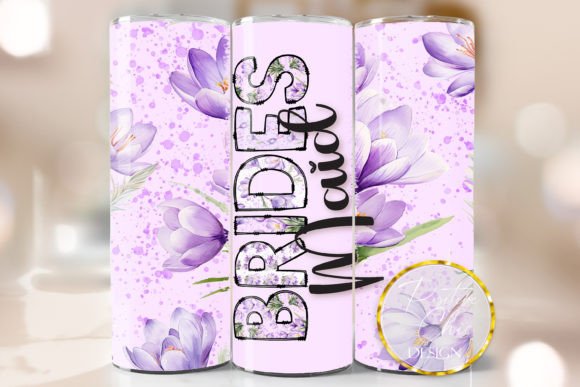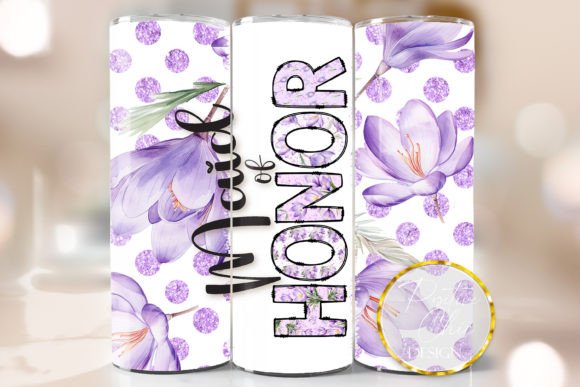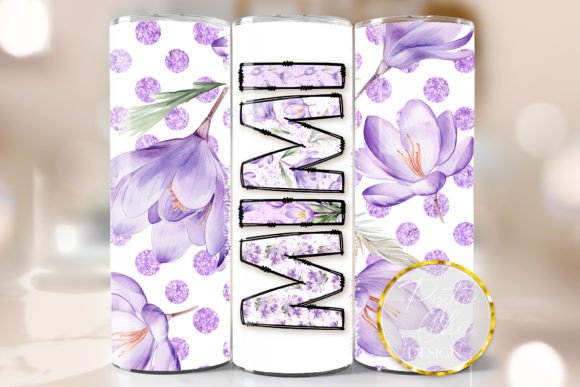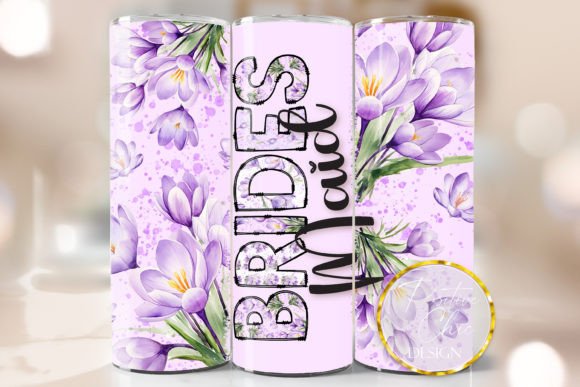
Bridesmaid Wedding Tumbler Wrap Design
First Impressions: Charm, Clarity, and Context
When I opened the Bridesmaid Wedding Tumbler Wrap Design, my first thought wasn’t “pretty”—it was “purposeful.” This isn’t a generic floral monogram or a cluttered script; it’s a clean, balanced composition built for legibility and warmth. The layout flows with gentle curves—ideal for wrapping around a 20 oz skinny tumbler—but its structure translates surprisingly well to flat embroidery surfaces too. As a designer who regularly adapts sublimation graphics for stitch, I immediately scanned for embroidery-friendly traits: open spacing between letters, minimal fine-line detail, consistent stroke weight, and no micro-thin serifs. It passed.
Real-World Use: From Tumbler Wrap to Embroidered Keepsake
Last week, I used the Bridesmaid Wedding Tumbler Wrap Design as the foundation for a set of personalized cotton tote bags for a local bridal boutique. Instead of printing, I digitized a simplified version (keeping the original’s graceful lettering and delicate vine motif) for machine embroidery. Why? Because bridesmaids don’t just want a tumbler—they want something tactile, lasting, and gift-ready. A stitched tote feels more intentional than a printed one. And here’s what stood out: the design’s inherent rhythm made alignment easy on curved seams and side panels. No awkward stretching or distortion. That same adaptability makes it strong for sweatshirt embroidery, aprons, tea towels, and even nursery pillow covers—especially when paired with soft pastel thread colors.
Where It Shines—and Where to Pause
The Bridesmaid Wedding Tumbler Wrap Design excels in medium-to-large hoop applications: 4x4 inches and up. On a tote bag or baby blanket, the proportions breathe. Satin stitch outlines hold crispness; fill stitch areas stay breathable without overwhelming fabric drape. But I’d hesitate to shrink it below 3x3 inches for embroidered patches or cap fronts—the subtle vine details risk bleeding or stitching into indistinctness on small hoops.
Texture matters too. On thick, napped fabrics like fleece or heavy canvas, the design retains charm—but on thin, stretchy knits (think lightweight baby onesies or ribbed tank tops), stabilizer choice becomes critical. I recommend tear-away + light cut-away combo to prevent puckering. And while the design works beautifully on light fabrics, always test thread contrast on dark backgrounds: light gray or ivory thread may disappear on navy or charcoal unless you add an underlay or adjust density.
Stitching Clarity Meets Customer Trust
Customers notice craftsmanship before they read your shop policy. When someone receives a tote bag with cleanly stitched Bridesmaid Wedding Tumbler Wrap Design lettering—no skipped stitches, no fuzzy edges, no visible stabilizer shadow—they associate that polish with your brand. That perception directly lifts perceived value, repeat orders, and Etsy reviews. It also reinforces trust in personalization: if the name “Emma” looks sharp and centered, the buyer believes “Sophie” and “Maya” will too. For craft businesses, that consistency is non-negotiable.
Practical Designer Notes You’ll Actually Use
- Always test on scrap fabric first—especially if layering over seams or curved edges.
- Check thread color contrast in natural light, not just on screen. What looks warm on your monitor may read muted on linen.
- Review stitch density before finalizing. Sublimation PNGs don’t include stitch data—so if you’re converting to an embroidery file, avoid overloading fill areas on lightweight fabrics.
- Confirm hoop size compatibility with your most-used machines. This design scales well, but tight corners or narrow stems may need manual adjustment at smaller sizes.
- Inspect small details like leaf tips or letter terminals—these are often where digitizing shortcuts show up.
- Test black-and-white mockups to assess hierarchy and balance without color distraction.
- Compare performance on light vs. dark fabric backgrounds—not just for visibility, but for how stabilizer shows through.
- Use proper stabilizer: medium-weight cut-away for structured items (totes, caps); tear-away for stable wovens (tea towels, pillow covers).
- Verify licensing before selling finished products or bundling the design into digital embroidery kits. Since this is listed as a Graphics product in Crafts, confirm whether commercial use is permitted for physical goods.
Beyond the Tumbler: Design Assets with Lifespan
What makes the Bridesmaid Wedding Tumbler Wrap Design valuable beyond its namesake use is its versatility as a design asset. It’s not locked to drinkware—it’s a mood, a moment, a tone. I’ve repurposed elements into printable mockups for Etsy listings, extracted the vine motif for border accents on baby onesie embroidery, and adapted the font style for custom wedding invitation embroidery files. As a digital product seller, that kind of flexibility means one purchase supports multiple income streams: finished embroidered goods, digital embroidery files, printable SVG bundles, and even craft kit instructions.
A Final Thought for Makers
If you’re choosing between ten similar designs for your next batch of personalized gifts or small shop merchandise, let the Bridesmaid Wedding Tumbler Wrap Design earn its place—not because it’s trendy, but because it’s thoughtful. It respects the limits of thread and fabric. It assumes your customer values care over speed. And it gives you room to execute well, whether you’re stitching your first tote or your five-hundredth. In handmade work, that quiet reliability is rarer—and more valuable—than flash.