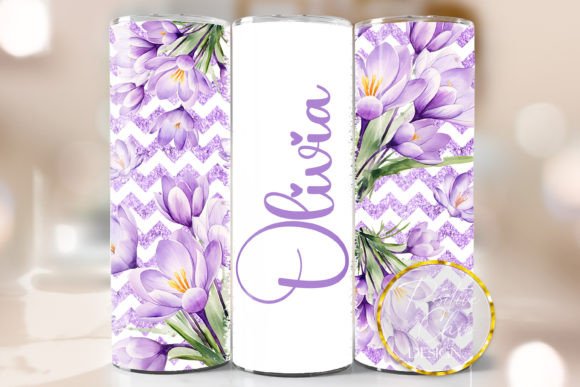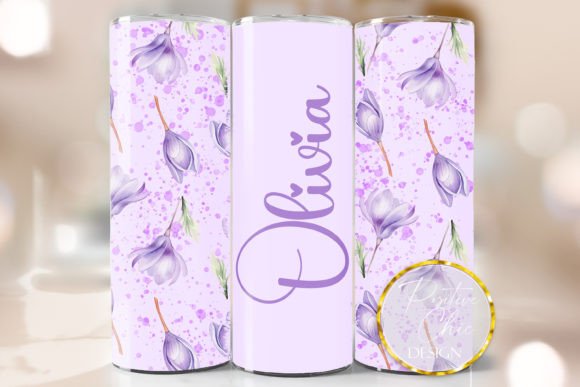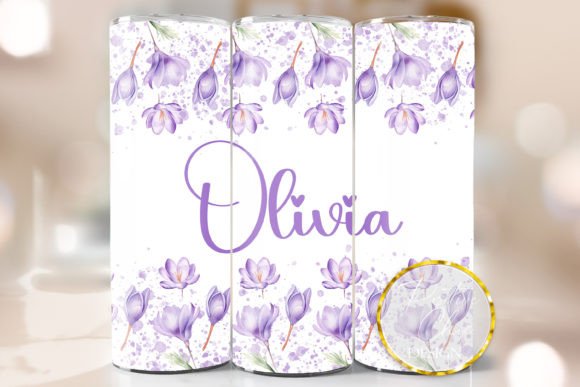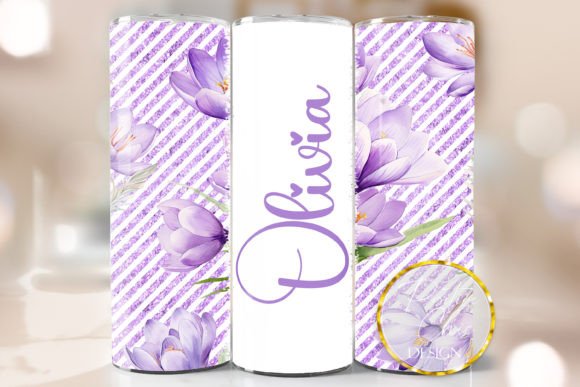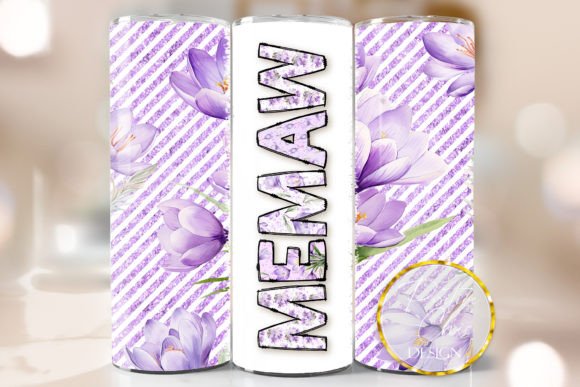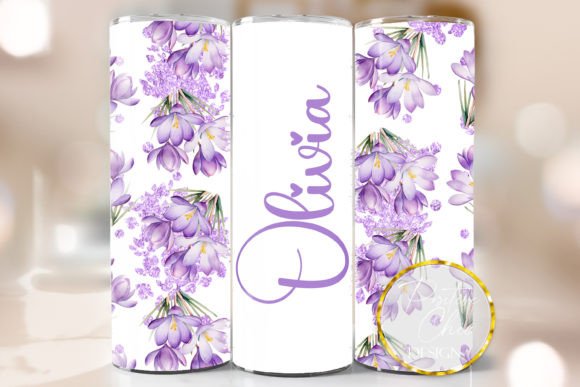
Custom Name Flowers Spring Tumbler Wrap
A Designer’s First Glance: Light, Lively, and Purposefully Delicate
When I opened Custom Name Flowers Spring Tumbler Wrap for the first time, I didn’t see a “sublimation design” — I saw rhythm. Soft curving stems, clustered blossoms with subtle petal layering, and a graceful script name area that invites personalization without demanding center-stage attention. It’s spring in motion: not overly sweet, not aggressively botanical — just quietly confident. As an embroidery designer who regularly translates digital graphics into stitched reality, my first instinct wasn’t to admire it on screen — it was to ask: Where would this live best when stitched? Not on a tumbler (it’s a sublimation file, after all), but on real handmade products — like the custom embroidered linen tea towel I’m prepping for a local boutique’s Mother’s Day launch.
How It Translates to Real Embroidery Projects
This isn’t a dense, high-stitch-count monogram or a bold geometric repeat. Custom Name Flowers Spring Tumbler Wrap carries a lightness that works beautifully for projects where subtlety equals sophistication. On a lightweight cotton tote bag? Yes — the floral elements read clearly without overwhelming the fabric. On a baby onesie? Absolutely — its airy layout avoids bulk and keeps stitching soft against delicate skin. As a sweatshirt embroidery piece? Choose a relaxed fit style and place it low on the chest or back; the vertical flow of the stems balances the garment’s drape. And as an embroidered patch for aprons or denim jackets? It holds up well — especially if you simplify the inner petal details slightly for cleaner satin stitch definition.
I’ve used similar motifs for Etsy sellers launching personalized nursery decor lines — think pillow covers, muslin swaddle sets, and framed hoop art. Custom Name Flowers Spring Tumbler Wrap fits right in: gentle enough for baby items, refined enough for wedding guest favors or boutique kitchen towels. Its strength lies in versatility without vagueness — it says “spring,” “name,” and “handmade care” all at once.
Where to Proceed With Thoughtful Stitching
That same delicacy means thoughtful execution is non-negotiable. This design doesn’t forgive poor stabilizer choice. On textured fabrics like terry cloth or heavy linen, the fine stem lines and small flower centers can blur — test stitch on scrap first, and consider a light cutaway + tear-away combo. Thin or stretchy knits? Add a topping (like water-soluble film) to prevent thread sinking and keep lettering crisp. Dark fabrics demand extra attention: check how the lighter floral tones translate in your thread palette — sometimes switching from pastel poly to matte cotton or blending two thread colors saves clarity.
Curved surfaces — like caps or curved pillow edges — require careful hooping and possibly slight digitizing tweaks (if you’re adapting it from PNG). The name script area, while elegant, has narrow spacing between letters; on small hoop sizes (under 4x4 inches), consider simplifying serifs or increasing letter tracking manually before stitching. Also note: tight corners in the vine work may need reduced stitch density to avoid puckering — especially on layered garments like reversible aprons or double-layered tea towels.
What It Adds to Your Finished Product — and Your Customer’s Experience
Stitched thoughtfully, Custom Name Flowers Spring Tumbler Wrap elevates perceived value instantly. It reads as intentional, not generic — which builds trust with buyers browsing Etsy shops or craft fairs. A personalized gift with this motif feels curated, not mass-produced. That matters for holiday embroidery, bridal party gifts, or boutique branding where consistency and quiet elegance reinforce your shop’s voice.
Visually, it balances negative space and detail in a way that photographs well — essential for printable mockups and digital product previews. Customers scrolling your shop notice the harmony between name and flora before they even read the description. And because it’s inherently scalable (within reason), it supports cohesive design assets across multiple product types: same motif on a baby bib, matching tea towel, and embroidered patch set — strengthening brand recognition without repetition fatigue.
Practical Notes Every Embroidery Designer Should Run Through
- Test first — always stitch on scrap fabric matching your final project’s weight, texture, and color.
- Check thread color contrast — especially in the name area and flower centers, where low-contrast combos can disappear on dark backgrounds.
- Review stitch density — look for areas where fill stitches might crowd thin stems or overlap too tightly; adjust if needed for breathability.
- Confirm hoop size compatibility — measure the full design width/height against your most-used hoops.
- Inspect small details — zoom in on petal edges and script terminals; what looks clean on screen may need cleanup for smooth satin stitch.
- Mock it in black and white — helps spot tonal flattening before committing thread.
- Use proper stabilizer — light cutaway for stable wovens, mesh + topping for knits or napped fabrics.
- Verify licensing — since this is a digital embroidery file sold for Crafts and Graphics use, confirm whether commercial embroidery or resale of finished products is permitted before listing on Etsy or in your small shop.
Final Thought: A Quiet Anchor for Intentional Making
Custom Name Flowers Spring Tumbler Wrap won’t shout from a crowded craft fair table — and that’s its superpower. It’s the kind of machine embroidery design that supports your voice instead of overriding it. Whether you’re stitching personalized gifts, building a cohesive line of handmade products, or sourcing reliable design assets for your craft business, this motif earns its place by being both distinctive and dependable. Just remember: its charm lives in the details — so give those details the care they deserve.